Religion, Violence, Crime and Mass Suicide
https://www.humanreligions.info/violence_and_crime.html
By Vexen Crabtree 2025
#buddhism #christianity #hinduism #india #islam #judaism #monotheism #religion #religious_morals #religious_violence #sikhism #USA #violence #war
Religion continues to be associated with violent fanaticism, as religion-inspired horror occurs with "unceasing regularity. Whether the struggles occur among Sikhs, Muslims and Hindus in India, or between Jews and Muslims in Jerusalem"1. No major world religion has avoided generating violence extremist movements from within its ranks2,3. This has been the case "since time immemorial"4. Religion-inspired violence is the stimulus for some people to call for the abandonment of religion altogether5 - it's not worth the risk. Monotheism has bred the most violent individuals and cultures due its intolerance of 'other' gods and a general strictness on the specifics of belief but, other forms of religion also breed antisocial and violent individuals. Public opinion (in the USA) correctly rates Islam, Christianity and Hinduism as the most violent religions (64%, 9% and 4% said so); Judaism was rated last at 2%6. "Even Buddhism", the most peaceful world religion, has stimulated organized violence3.
Three factors lead believers into uncivil behaviour. (1) Beliefs that don't have to adhere to Human morals, and (2) beliefs that higher authorities give legitimacy to actions simply if they serve the purpose of a specific religious group, (3) belief that extreme religious loyalty is a method to attain a positive afterlife7, (4), an otherworldly idealism and fixation with the corruptness, evilness or immorality of this world. The latter can push groups into extreme isolation where they cease to consider outsiders to be worthwhile human beings. Mass suicide, shoot-outs, gas attacks and other atrocities have befallen groups whose main thing in common is religious dread of wider society and belief in an apocalyptic judgement-day. Many such groups emerged from mainstream religious movements and gradually became more and more sectarian over time. The main causes that allow this slip are insipid supernaturalism, poor education, sectarian schooling and a lack of critical thinking.
- Violence and Religion
- High Rates of Imprisonment
- Sex Crimes
- Mass Murder and Suicide Cults
- Withdrawing From the World: Self-Isolation Enables Extremism
- The Nizari / Assassins (11th-13th Centuries)
- The Thuggae (13th-18th Centuries)
- Mass Delusion: 276 Child Murders and Over 600 Adult Suicides: Jim Jones' Peoples Temple (1978)
- Apocalyptic Survivalism: The Branch Davidian's Shoot-Out (1993)
- Apocalyptic Survivalism: Aum Shinrikyō's Tokyo Sarin Gas Attack (1995)
- Rejection of the World and Mass Suicides: Order of the Solar Temple and Heaven's Gate (1994-1997)
- Scriptural Justifications for Murder
- Prevention
- Links
1. Violence and Religion
1.1. Religious Wars: Politics and Culture (Example: Nigeria and India)
#bosnia_&_herzegovina #buddhism #canada #christianity #croatia #hinduism #india #iran #islam #israel #nigeria #religion #religious_violence #serbia #sri_lanka #violence #war
Many religious wars have a political and cultural component. Often it is not just two groups of people fighting over religion, but, one culture fighting another. Some defend religion in general by saying that societal divisions are the main factor in such conflicts. However, such divisions are themselves worsened by the adhering to religious identities. Religion is not only just another way of separating them, but, it is often intrinsic to the religion that non-believers are less moral or less worthy. It seems that religious texts actively promote sectarianism, and, given that this is the case, even where cultural factors play a role in mass violence it seems that religion often makes it worse and is sometimes the cause of the conflict in the first place.
For example in Nigeria from 1990 to 2007, 20,000 have been killed specifically in the name of religion8. The country is divided between Christians and Muslim, and religious identity is highly important, more so than nationalism or any other element of identity. These problems are a feature of the entire region. This data comes from a report by The Economist in 2007, they summarize: "Evangelical Christians, backed by American collection-plate money, are surging northwards, clashing with Islamic fundamentalists, backed by Saudi petrodollars, surging southwards"8. Although Africa is the front-line, both groups of believers are supported financially and organisationally by their respective Churches around the world. Just as Iran and Israel support armed groups that antagonize each other in various countries of the Middle East, Africa is another front line between Islamic and Christian battles for power.
The them-and-us attitude is not just prevalent in monotheistic religions. India has seen much violence in the name of religion since the 1990s, as Hindu religionists are becoming increasingly anti-Christian and anti-Muslim. Churches have been burned down, Missionaries violently repelled, priests murdered, tens of thousands of Christians have fled their homes and in many states laws exist to make it harder to convert to Christianity, in contradiction to all ideas of equality and freedom of religion. Converts to Christianity are typically very poor, yet, there is an uproar against expanding welfare schemes that cover poor Hindus.9. If the instigators and the victims both decided to give up religion, then, there would be one less label for those fellow Indians to use to divide each other.
It is not the case that the "real" problem is with culture or language rather than with religion. National problems with communities that speak different languages are made much more problematic when those differences also coincide with religious differences, such as in Sri Lanka, where Hindu Tamils are opposed to Buddhist Sinhalese10. "The former Yugoslavia has broken into so many parts largely because of growing hostility between Muslims (mostly Bosnians) and Christians (Serbs and Croatians)"10. The religious difference "often plays a more important role than language", writes anthropologist Christophe Jaffrelot. He continues:
“... language-based multiculturalism is easier to maintain than religious-based multiculturalism, as illustrated by the integration of Quebec into Canada and of the Dravidian states into the Indian Union. This is probably due to the fact that federalism can help to diffuse tensions more effectively between linguistic groups than between religious communities. But it is also due to the emotional power of religion. Devotees are more ready to mobilize in defense of their religion because of its sacred, hence imperative, character.”
"Religion and Nationalism" by Christophe Jaffrelot (2011)11
This page will not, however, concentrate on large-scale cultural-religious conflicts and instead concentrate on the activities of criminal and violent religious folk acting in a more individual role.
1.2. The Role of Strange Beliefs
#Abrahamic_religions #algeria #beliefs #dangerous_beliefs #france #india #islam #israel #murder #UK
The promotion of strange beliefs and associated mindsets is a danger of religious thought in general. For example, when Eden Strang attacked worshippers at a Church in South London, UK, in 1999, he was later found by the courts to be insane. He attacked the congregation because he thought they were demons in human form12. But if he didn't believe in demons, then, there is a chance his actions would have been different. He told psychiatrists that God had ordered him to do it13. Whilst it is true that most God-believers don't start murdering people; it is also true that they are one step closer to killing in the name of god than atheists who don't believe in gods.
“Once people convince themselves that they have been put on Earth as instruments in some divine plan, there seems to be no limit to the horrors they are willing to commit to carry out that plan.”
"Superstition: Belief in the Age of Science" by Robert L. Park (2008)14
“Words like "God" and "Allah" must go the way of "Apollo" and "Baal," or they will unmake our world.”
"The End of Faith: Religion, Terror and the Future of Reason" by Sam Harris (2006)15,16
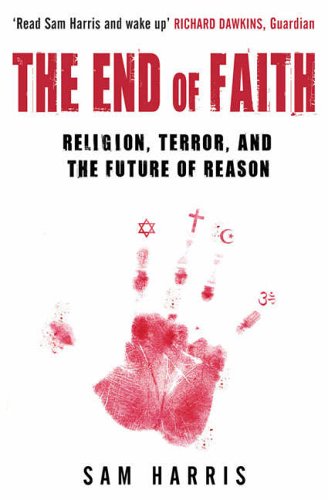

Sam Harris (2006)15 argues at length that in today's world, even seemingly innocent beliefs in things like a Paradise-after-death can lead to murder and a lost sense of the value of life in this world. Dawkins makes a similar warning about the irrationality of religion and its effect on morals and actions, in The God Delusion17, concentrating on issues such as violence against abortion-clinics and various other activists with bizarre beliefs18. In "Fundamentalism" by Malise Ruthven (2007)19 the author warns that by giving things like murder, strife and war a place in God's ultimate (and perfect) plan, almost any action can be seen as endorsed by God - "the horrors and chaos of wars, as described in the Mahabharata and the Book of Joshua, as debated in the Baghavad Gita, as predicted in the Book of Revelation, and as alluded to in the Koran, are subsumed within an order seen to be meaningful and ultimately benign"20. When such beliefs are institutionalized or given free reign, it can spell disaster for those who disagree with them. Anti-Semitism for the last 2000 years has been fuelled from Christian theology, and many instances of violence against homosexuals stems from the intolerant religious teachings of the Abrahamic religions. If people understood religious myths to be unreal, and if they had a more rational and skeptical outlook, it would be much less common for such religious prejudices to translate into violent actions.
 Take Mohammed Merah, a French national originally from Algeria, whose story was told by The Economist (2012)21. His beliefs led him to the wild conclusion that in order to be rewarded by God and thusly to live forever in paradise, he had to conduct a series of terror attacks in France. He did so, killing four adults and three children. He did it because in France, no-one is allowed to wear complete face and body coverings in public. But his victims included members of an Israeli family who were not even French and therefore were completely unrelated to the ban on complete body coverings - Mohammed Merah's excuse was that he also opposed Israel because it was also an enemy of Islam. When they raided his house on 2014 Mar 22, he shot and killed three paratroopers, before being himself killed. Try to imagine, exactly, how it is that this immoral monster can think that God endorses his actions? Because he has very strange beliefs, but not only that, but that he believes he must act on those beliefs no matter what. Only religion can instil such a dramatic sense of ultimate urgency and divine necessity upon murderers.
It is not just the worldwide monotheistic religions that provide motivation for irrational violence, sectarianism and murder. Superstitious beliefs in general can often provide people with the ultimate excuse for acting against those who they simply don't like. Take the example of witchcraft, widely believed in across the world except in the largely secular countries of the developed world. Here's a case from Assam, in north-east India.
“In early 2007 Mrs [Ranjita] Basumatary was driven from her original village after her neighbours accused her of being a dain - a witch. Around 100 villagers surrounded her home and beat her with sticks, leaving her badly bloodied and bruised. After receiving death threats, she fled with her husband and three children. [...] Local jealousy seems to have prompted the accusations of witchcraft. Her family had prospered, leasing livestock to other villagers. It led to resentment. When children in the village fell sick, the ojha accused Mrs Basumatary of casting spells - his own charms and potions having failed. Her case is not an isolated one. At least 17 people were killed in witch-hunts in the area last year.”
The Economist (2012)22
If only the locals understood the various neurological, physical and subtle causes of superstitious beliefs that mislead us humans into such superstitions. I lay out these causes in Errors in Thinking: Cognitive Errors, Wishful Thinking and Sacred Truths and The False and Conflicting Experiences of Mankind: How Other Peoples' Experience Contradict Our Own Beliefs. If only the locals understood the benefits of opening all beliefs to critical analysis. Their absurd behaviour can be fixed, if only they learn to question their own beliefs and therefore adopt a more rational outlook. But they can't, because religious taboos and the authority of the local spiritual leaders prevent it, just as similar people have done across the world, substituting dogmas for sensible inquiry into the world, and ousting those who dare to think differently.
It seems that in total the general religious mindset permits a kind of irrationalism that can easily lead to violence - although most people (religious or not) are not violent. Harris makes the undeniable argument that in a world where weapons such as nuclear arms and biological weapons are becoming easier to access, we must make up for it by promoting clear-thinking, and if that means discouraging religion, it is probably for the best.
Also read:
- Why Question Beliefs? Dangers of Placing Ideas Beyond Doubt, and Advantages of Freethought
- Errors in Thinking: Cognitive Errors, Wishful Thinking and Sacred Truths
- The False and Conflicting Experiences of Mankind: How Other Peoples' Experience Contradict Our Own Beliefs
1.3. Africa: A Modern Christian/Muslim Front
During the Crusades, Christian and Muslim armies sallied back and forth across Europe and the Middle East. Christianity had plunged the West into the Dark Ages, and Islam was carrying only a dim light of Human progress. It is arguable that such a conflict was as much cultural and political as religious. But religious differences helped define Arabs and Christians as enemies. Today, such a bleak picture is mirrored in religious battles across the continent of Africa. It is a continent where democracies fail as frequently as they rise and where scientific enterprise is retreating from powerful (and armed) religious bodies. Take Nigeria and the summary presented by The Economist:
“Nigeria, evenly distributed between Christians and Muslims, is a country where people identify themselves by their religion first and as Nigerians second. Around 20,000 have been killed in God's name since 1990. [...] This is one of many religious battlefields in this part of Africa. Evangelical Christians, backed by American collection-plate money, are surging northwards, clashing with Islamic fundamentalists, backed by Saudi petrodollars, surging southwards.”
The Economist (2007)23
Once fired up with a particular set of religious beliefs - especially ones that teach that non-believers need to be converted for their own good - it is easy to see how this adds fuel to the fire in an already violent continent.
1.4. The Divine Endorsements of Violence
#heaven #murder #religious_violence
Social research has found that the greater a perceived authority, the more its opinions are taken seriously24. And the rewards of the gods can be taken more seriously than life or death. The concept of attaining heaven is a consistent feature of religious terrorists and occurs again and again in the emotional, religious, written and spoken proclamations of violent groups and people who murder for god7. Do it, for sincere religious reasons, and you will wake up in heaven.
The National Secular Society reports on one of a few studies on religious violence:
“SCRIPTURAL VIOLENCE CAN FOSTER AGGRESSION, ESPECIALLY IN BELIEVERS. [...] A study published in this month's Psychological Science looks at the relation between aggression and recent exposure to accounts of biblical violence. Students were asked to read a story about the torture and murder of a man's concubine and his tribe's measured response: they assembled an army and razed several cities, killing every man, woman, child and animal they could find.
Half the students were told that this was based on an ancient scroll recently discovered by archaeologists. The other half were told that it was from the Book of Judges in the Old Testament (which it is). In addition to the scriptural distinction, half of the students from both the Bible and the ancient scroll groups read an adjusted version that included a sentence in which God commanded his followers to take up arms against the others "and chasten them before the LORD." [...]
Higher levels of aggression were measured in [...] in those who were told that the passage was from the Bible and in those who had read that the violence was sanctioned by God. Unsurprisingly, this effect was greater in believers than in atheists.”
“Religion is not just a conventional sign of difference (like the contrasting colour shirts of opposing football teams); it is also often deeply embedded in the sense of ethnic or national identity. It provides each side with a justification for seeing itself as superior (we obey God) and the enemy as inferior (they are the infidel)”
"Fundamentalism" by Steve Bruce (2008)26
If you combine the divine sanctioning of violence found in holy books such as the Christian Bible and the Holy Quran, with the desire for an afterlife attained through worldly actions, the recipe for violence is a potent one. Failed Islamic suicide bombers have, for example, explained that they want to attain Paradise for themselves (and friends of their choosing) by violently martyring themselves in the fight against non-believers27. The motivation was great because they truly believe the value of such actions are spelled out in God-given written texts.
1.5. Monotheism and Violent Intolerance
#abrahamic_religions #christianity #intolerance #islam #judaism #monotheism #religious_violence
There is a particular inclination towards organized violence in the histories of monotheistic religions (those with just one god). Monotheism is embodied by three world religions, Judaism, Christianity and Islam.
“The God of the Abrahamic religions, so far as it is concerned in The Bible, The Koran, and in history, hates opposing Gods. The Israelites are described as being commanded by God, time and time again, to wage war against and kill nonbelieving pagans because they dare to worship icons, fake gods, and any number of unapproved things. Worshipping wrongly is prohibited in the traditional Ten Commandments, and is consistently one of the most punished crimes in the holy texts of Jews, Christians and Muslims. The emphasis on correctness of individual belief and individual salvation has led monotheism down an intolerant and often violent path in history. The development that "insiders are correct" and "outsiders are wrong" is not a feature of simple tribal religions28, but this idea of correctness developed alongside literacy, especially in monotheistic religions, finding particular prominence in Christianity of the first century29. It made the new monotheism sectarian, schismatic and aggressive; social and moral laws were deemed inferior to the new emphasis on textual fundamentalism. It heralded a new type of religion, fundamentally hostile to all other religions.30”
2. High Rates of Imprisonment
2.1. Incarceration, Poverty, Intelligence and Religion
#crime #intelligence #prison #religion
Prison incarceration is linked with low intelligence. Intelligence is inversely linked to faith. Religious parenting causes a reduction in children's average IQs. Evidence for this is that religious types (notably Catholics) are over-represented amongst prison inmates and other nasty classes of human, such as drug addicts, alcoholics, compulsive gamblers and sex industry workers; not to mention the fact that sectarian religious schools promote the social divisions that hundreds of sociological analyses have proven to destroy community cohesion and increase violence and crime. If religion makes a person more likely to fall foul of societies' penal codes and moral judgements, and so does lower intelligence, and also religion causes lack of intelligence, then we have a self-perpetuating cycle. Two ways forward are an increase in non-religious education and the reduction of the authority given to religious ideas.
As crime is also linked to inner city populations, and this is also, again, where religion is found to be strongest, it seems that the religious have always been bound to find themselves over-represented amongst prison populations, such as Muslims31 and Catholics32.
“According to statistics from the Federal Bureau of Prisons, Christians make up almost 80 percent of the prison population. Atheists make up about 0.2 percent. [...] It is safe to conclude that the godless do not fill prisons. Published studies do indicate that a child's risk of sexual abuse by a family member increases as the family's religious denomination becomes more conservative, that is, when the teachings of scriptures and other doctrines are taken more literally. Similarly, the probability of wife abuse increases with the rigidity of a church's teachings pertaining to gender roles and hierarchy. [...] Even observers from the Christian side have expressed dismay that the current dominance of evangelical Christianity in America has not translated into a strengthening of the nation's moral character or the characters of evangelical Christians themselves. In an article in Christianity Today, theologian Ronald Sider lamented [...]:
"The findings in numerous national polls conducted by highly respected pollsters like The Gallup Organization and The Barna Group are simply shocking. 'Gallup and Barna,' laments evangelical theologian Michael Horton, 'hand us survey after survey demonstrating that evangelical Christians are as likely to embrace lifestyles every bit as hedonistic, materialistic, self-centered, and sexually immoral as the world in general.' "”"God, the Failed Hypothesis: How Science Shows That God Does Not Exist" by Prof. Victor J. Stenger (2007)33
While it is not true to say that this is proof that strict religion causes criminality, it is at last proof that a population's adherence to a religion does not reduce levels of socially unacceptable behaviour.
2.2. Why Are There So Many Catholics in Prison?
The liberal thinker Barbara Smoker remarked on in a (UK) Government discussion group that Catholics have a greater chance of being found in prison than many other social groups:
“I mentioned that the proportion of Roman Catholics in penal institutions is at least twice their representation in the population at large. Though I was under the impression that this was a well-known fact, it caused some derisive laughter. But on checking the statistics, I find that again I erred on the side of caution: RCs comprise 12 to 13 percent of the population of England and Wales, but 25 to 35 per cent of the inmates of borstals, detention centres, prisons and hostels for drug addicts, alcoholics, and the like [...] and similar ratios pertain in all Western countries.
A book entitled "The Church Now" (published in October 1980 by Gill and Macmillan) contains a chapter by a Catholic priest, Fr Terence Tanner, enquiring why this should be so. He points out that the answer generally given in the past - that RCs are unduly represented among the poorer sections of the community - is no longer valid.”
"Freethoughts" by Barbara Smoker (2002)34,32
Now that poverty no longer excuses Catholic crime, another common answer is that many people convert to a religion during a stint in prison because it is generally thought (by both inmates and those in the world at large) that this increases the chance of an early release. Statistics have indeed shown that there is a strangely high rate of conversion amongst prisoners, and sociologists have also found that it does not generally coincide with genuine belief. But it is beside the point, because of the simple fact that Catholics are over-represented in many walks of life that do not include imprisonment:
“The Times of 3 October, 1980, carried a front page comment by its religious affairs correspondent, Clifford Longley (himself RC) under the heading 'The Dilemma over Roman Catholic Delinquents', the first sentence of which reads: 'Roman Catholics are vastly over-represented among drug addicts, alcoholics, compulsive gamblers, prostitutes, night-club strippers and convicted prisoners, for reasons no one seems to know.'
Catholic children are largely segregated in their own denominational schools. In any case, Cardinal Hume's contention that church schools are morally beneficial is hardly borne out by the facts.”
"Freethoughts" by Barbara Smoker (2002)34,32
If we accepted that conversion-in-prison explained why there were more Catholics in prison, it wouldn't account for why there were so many Catholics amongst the other categories mentioned by Smoker; drug addicts, alcoholics, compulsive gamblers, prostitutes and night club strippers. The final point she makes is that this prevalence undermines the Catholic idea that Catholic schools tend to produce a better class of moral person.
We are about to see below that one reason for the higher rates of sex crimes may be explained by Christian ideology: their teachings on human sexuality do not mesh with reality and the mental dissonance that results can cause distorted behaviour.
2.3. Discords Between Religious Belief and Law
A more prosaic possible cause of the higher rates of criminal and anti-social activity amongst the religious is an inherent bias within legal systems against such people. Whenever such biases are revealed in court, they will normally fall foul of anti-discrimination laws, but, what if a general and obscure bias permeates the entire legal system? As some Western countries have a strong tradition of historical Christianity, is it possible that such legal systems contain an inherent bias against non-Christian religions? Examples include the Sunday trading laws that have become accepted standards in the West and the definition of marriage which generally conforms to Abrahamic ideals (Judaic, Christian and Muslim) at the exclusion of other ideals.
More enlightening are the historical biases and battles between different Christian denominations themselves. The biggest conflicts were between the Protestant and Catholics; whenever one took power in England, the other became heavily suppressed under law. These intolerant law-making policies of major denominations may have contributed to a general bias in law that makes it likely that some religious adherents are likely to find particular laws difficult. Although specifics of such anachronisms are hard to find in the secular West (as the now-dominant secularist law-making attempts to treat all religions fairly), it does demonstrate the point that religion-specific legislation should be kept out of law as much as possible, but also that it is worth considering making changes to accommodate religious adherents if there is no strong rational argument against it.
3. Sex Crimes
#buddhism #christianity #hinduism #judaism #new_age #religion #religion_sex #sexuality
That prostitutes and night-club dancers and other sex trades, and crimes, have a higher incidence of Catholics is an anomaly in the minds of most laypeople. Such behaviours revealed their darkest sides in the 1990s and 2000s when many child abuse scandals centered around the Christian priesthood gain much media coverage.
“The high child abuse and sexual abuse rates within the Christian priesthood highlight a problem that many religions face: We should not attempt to mould human sexuality around otherworldly religious ideals. Sexual dysfunction always results. Psychologists and sociologists have noted the association between extreme religious fervour and psycho-sexual problems (the former causing the latter), and the highly negative stance that many monotheistic religions take towards sexuality in general have contributed to a general malaise amongst their lay adherents, and a serious pandemic of abuse amongst professional religionists. The religious attitude towards religion is to behave like an ostrich and stick its head in the sand, hoping that theology can override biological truth, but merely making its victims unable to cope with adult sexuality. Witness the hateful and confusing statements that Christians and Muslims make about homosexuals, the anti-contraception stance that the Catholic church has in an over-crowded world ridden with disease, the harmful and simplistic rejection of abortion and the patriarchal dominance over women that has gone hand-in-hand with traditional religion on every continent.
Many religious practices are somewhat more positive towards sexuality than Christianity. The scholar Veronique Mottier gives the example of Judaism, which disapproves of abstinence35. Karen Armstrong reminds us that "Certain sects in Buddhism and Hinduism have used sex as a mystical activity. Everybody has heard of the Karma Sutra but not everybody is aware that this is not just a sex manual, but a method of achieving transcendence and spiritual enlightenment. Christianity is unique in having hated and outlawed sex and in making people feel guilty because they are sexual beings"36. But it is not just the subject of sex which is important to a discussion on sexuality - it still must be remembered that all traditional religions have normalized the dominance of men over women, and often obsessed over matters such as female dress.
In the modern world, many modern popular movements provide an alternative to traditional religions, and have enshrined normal sexuality. The secular world merely lets sexuality remain natural, and the New Age movement amongst many others, actively engage sexuality. The results have been much more positive and healthy than those of the classical monotheistic religions. This is one reason why countries that have liberal laws on abortion also have much lower rates of abortion than highly religious countries that restrict abortion heavily. An atmosphere of taboo and restriction serves limits responsible sexual behaviour. Rather than an ostrich, be a peacock!”
4. Mass Murder and Suicide Cults
#hinduism #india #islam #judaism
Hinduism, Judaism and Islam each supply a historical example of organisations devoted fully to religious terrorism. Firstly, Judaism gives us the Zealots (Sicarii) of the 1st century CE, who conducted a campaign of terror and murder (often against fellow Jews) to try and stimulate an uprising against the Romans. Operating across the Middle East and south Asia during the 11th-13th centuries, the Nizaris (Assassins) had religious authority from Muhammad to murder, and done so to bring about the end of times and stimulate the appearance of an Islamic messiah. Finally, in India for up to 700 years until the 19th century, the Thuggae were a secret organisation of hereditary serial murderers, who worshipped Kali and over many centuries, killed more than a million people to appease her, maintain balance, and attain paradise for themselves.
In addition to historical examples there is a bloody stream of isolationist modern sects that have ended in violence: Jim Jones, the Branch Davidians, the Order of the Solar Temple and Heaven's Gate are some of the most famous examples. Aum Shinrikyo's sarin gas attacks and a number of extremely violent Islamic groups in Africa tell us that the problem of religious violence is not new, not over, and not yet solved.
A combination of religious self-righteousness, utter devotion, desire to become martyrs and holy permission to commit murder meant that these groups had no moral limit to their chosen activities, and their methods became infamous and often-copied, leaving a legacy of blood, for purposes that always failed.
Irrationality and susceptibility to believe some unlikely things about the universe can lead to ideals and sectarianism that separate 'others' from their humanity, and allow despicable acts to be undertaken.
4.1. Withdrawing From the World: Self-Isolation Enables Extremism37
Religious groups that are isolationist, and rely solely on each other, can encourage each other to go further and further away from the moral norms of wider human communities. A descent into extremist violence can be the result of irrational beliefs, or, beliefs that are seemingly rational, but employed without humanitarianism. Once the world is an enemy, anything can be justified.
“Terrorists can only trust each other. The nature of their commitment cuts them off from society; they inhabit a closed community that is forsaken only at great cost. [...] A pattern of mutual reassurance, solidarity, and comradeship develops, in which the members of the group reinforce each other's self-righteousness, image of a hostile world, and sense of mission. [...] Isolation and the need for internal consensus explain how the beliefs and values of a terrorist group can be so drastically at odds with those of society at large [and so] terrorist groups resemble religious sects or cults.”
"The Causes of Terrorism" by Martha Crenshaw (1990)38
4.2. The Nizari / Assassins (11th-13th Centuries)39
#iran #islam #musta'li #nazari
Founded in Persia (Iran) in 1090CE7,40. After the death of the Shi'ite Caliph of the Fatimid empire, Nizar was the heir but his younger brother al-Musta'li gained the empire. Nizar and his supporters were ousted and formed a secretive41 and defensive radical sect7, headquartered in a fortress in Persia. They became known for their campaign of assassinations of political enemies41 as they tried to prepare the Muslim world "for the coming of the Mahdi (or Messiah) who would create the conditions for an earthly paradise"40. Their activity was so prominent in the 11th-13th centuries41 that they generated the English word for someone who fulfils a directed murder, an assassination.
For more, see:
4.3. The Thuggae (13th-18th Centuries)39
#cults #hindu_violence #hinduism #india #kali #murder #religion #religious_violence #thuggae
The Thuggae (Thugs) were a secret religious society in India, who dedicated their lives to ritualistically strangling and burying victims as sacrifices to Kali, often in a way that specifically included first gaining their trust and confidence, and sometimes coming together in groups to perform a mass-murder. Parents initiated children into the order. They were not political, and had little wider motive other than the killings themselves. It's not clear how they were founded, but they existed as an organised fraternity by the 13th century CE and were eradicated in the 1830s. They believed that the killings kept the world in balance, and the victims and the Thuggae themselves were assured places in the afterlife for the performance.42,43,44,7
For more, see:
- "The Thuggae" by Vexen Crabtree (2025).
4.4. Mass Delusion: 276 Child Murders and Over 600 Adult Suicides: Jim Jones' Peoples Temple (1978)
In 1978 over 900 people died when the People's Temple (frequently known as Jonestown) murdered their (276)45 own children with poison. The rest of the community then followed suit, 200 of them killing themselves and shooting the others. The dead included 383 Americans46. They had previously practised the suicide routine. Their leader shot himself. He was American Rev. James (Jim) Warren Jones, an ordained priest in the mainstream Christian Church (Disciples of Christ). He had previously left the Methodist Church because they did not allow African-Americans to be members. Jones preached "an apocalyptic end of the world through race war, genocide and nuclear war. He maintained that he was the manifestation of the Christ principle and that he had the power to heal"47. The sectarianism and religious extremism of the Christian community brought about its own isolation. Its religious ideals were not compatible with the demands of the practicalities of real life, and the group was fixated by a Bible-based fear of the end of civilisation. Conflicts led Jones to move the community to a remote part of Guyana in 1977, but a Congressman soon followed with two investigators, worried by the concerns of relatives of members of the cult, and the stories of defectors. The community murdered them in 1978, and the same night put their suicide plan into action.
“Jonestown might be better understood as a utopian and millenarian society where suicide and murder were the final strategy when the idealistic goals of the movement failed. The conflicts Jones had with the outside world and the isolation of the experimental commune are key factors [... of] self-destruction.”
"Encyclopedia of New Religions" (2004)48,47
The truth is a little more complex than saying that religious extremism, led by extremist leaders, leads to such delusion that human life is made second to otherworldly idealism. For in this case, Jim Jones is said to be not only rather unchristian, but a communist atheist (according to some). Whether this is true or not, it is the religious mindset of the community - the susceptibility of his followers to believe him - that led them astray. He put on fake shows of his healing powers, complete with bloody props (rabbit flesh) that he proclaimed to be cancers, and claims to be an embodiment of a principal of Christ. He attracted the poor, the uneducated, Christians and spiritualists. If only people would think more skeptically, and not take claims of resurrection and magical healing seriously, few would have believed such odd claims about reality.
The Ontario Consultants for Religious Tolerance look at sociological, radical and anti-cult studies of the causes of the Jonestown disaster, and offer the following four points as being the main contributing factors:
- Jim Jones' mental illness, aggravated by his use of drugs.
- The group's intense fear of the imminent end of civilization.
- The extreme isolation of the Agricultural Project.
- Opposition and pressure from anti-cult groups, the media and U.S. government.
Ontario Consultants for Religious Tolerance (2007)45
4.5. Apocalyptic Survivalism: The Branch Davidian's Shoot-Out (1993)
We saw the Jim Jones' Peoples Temple movement progress gradually from mainstream Christianity, through to a fully-fledged survivalist cult. An emphasis on the end times (when in Christian belief, apocalyptic wars and death scourge most of humanity) emerged slowly. Such ideas are present in most mainstream religions so it is hard to tell believers that it is a dangerous belief. Isolationism, extremism, idealism and an intolerance of people without the same beliefs: these are all commonplace across religious communities. Once you believe in some of those principles, it is hard to draw a firm line and stop a community progressing down a slippery slope to a place where they consider their ideals to be more important than human life. Such a slope met the Peoples Temple in the Jonestown disaster where over 900 of them lost their lives in 1978. Another American group, the Branch Davidians, also took on an increasingly them-and-us attitude. They started out with Biblical ideas about the cataclysms of judgement day, and ended up stockpiling weapons. It culminated with the Waco siege where over 80 of the religionists died during a shoot-out with authorities49 in 1993.
 4.6. Apocalyptic Survivalism: Aum Shinrikyō's Tokyo Sarin Gas Attack (1995) 50
#antisemitism #aum_shinrikyo #australia #buddhism #christianity #freemasons #germany #hinduism #japan #mass_murder #religious_violence #russia #USA
Aum Shinrikyō was a Japanese apocalyptic religious cult founded in 1987 by Shoko Asahara51, already a convicted fraudster52. It proclaimed armageddon, war and end-times strife using a mix of Buddhism, Hinduism and Christianity53. They embraced a wild array of paranoid conspiracy theories, all with Aum as the sole path to salvation and its cult leader Asahara as the only embodiment of truth. It believed that the USA and Japanese governments were controlled by secretive cabals such as Freemasons and Jews (Asahara admired Hitler). By 1997 they had 10 thousand members in Japan, and 40-50 thousand across Russia, the USA, Germany, Australia and elsewhere54. The group amassed wealth, weapons, chemical laboratories, and sought nuclear weapons. As the Japanese police were investigating the cult after a kidnapping, murders and two previous attempts at mass murder, in 1995 Aum released sarin nerve gas on several Tokyo subway lines, killing 13 people and wounding 3 97655,56, aiming to cause mayhem and trigger the apocalypse.
For more, see:
4.7. Rejection of the World and Mass Suicides: Order of the Solar Temple and Heaven's Gate (1994-1997)
#france #heavens_gate #new_age #order_of_the_solar_temple #USA
Mass suicide frequently punctuates the progression of self-isolating religious communities. They are nearly always associated with belief in another world that they can travel to after death - be it heaven or a paradise on Earth. They often do not see themselves as belonging to this world, and consider the whole world evil, and often think that there is about to be a great war, worldwide cataclysm, or, judgement day. These beliefs were strongly apparent in Jonestown, where Jim Jones led the Peoples Temple to murder their own children before mostly committing suicide themselves. They believed in an imminent apocalypse and Jim Jones had previously predicted when it would happen (it didn't). The Branch Davidians had similar, urgent beliefs, which is why they stockpiled weapons. The sources of strong life-denying beliefs have varied sources: one French New Age group, the Solar Temple, was steeped in new age beliefs and practices, complete with Rosicrucian, Knights Templar and other esoteric interests. 74 of them died, mostly by suicide in Switzerland and France, then Quebec, in 1994, 1995 and 199757. They believed that the Second Coming of Jesus was imminent, and that they had to prepare for this. As with all such groups, they had issues with the real world, and in their farewell letters, they spoke of the "hypocrisies and oppression of this world"58.
Heaven's Gate committed their final act of self-destruction when all 39 members killed themselves in San Diego, USA, in 1997. The leaders, Herff Applewhite and Bonnie Lu Nettles, believed that "they were the two witnesses mentioned in Revelation 11"59, and combined weird New Age beliefs with UFO theories and were committed to detaching themselves from this world through physical training and suppressing all emotions. Over time, they became more and more isolated, and in keeping with other religious groups discussed on this page, also embraced the idea of a final departure from this world and they sold all of their possessions. In the case of Heaven's Gate, when the Hale-Bopp comet approached, they decided it hid a spacecraft that they could enter by committing suicide. They would be reborn, according to New Testament lore, into physically perfect bodies59. Clearly the group had little grasp of cosmology or physics and their spiritualist beliefs about travelling souls and an idealistic life overrode their common sense. The Skeptical Inquirer describes it in this entertaining manner:
“[They] committed mass suicide [so] their souls could travel to Heaven, Nirvana, or somewhere else, flying to this indefinable infinity in the company of hypothetical aliens in their physics-proof starship.”
Skeptical Inquirer (2013)60
Superstitions and an obsession with spiritual ideas of purity, 'karma' and other strange beliefs are at the core of the ability for a leader to convince people that mass suicide is a way forward. It is hard to stop such beliefs from forming. The ability of devout parents to indoctrinate children into the belief system is a main reason why the children are later victims of the group, either through constant miseducation or actual murder (the Peoples' Temple and nearly all other religious suicide groups have first poisoned their own children). It may help to prevent children being removed from public educations systems to be taught at home by extremists, but the methods of measuring who an extremist is, or, of measuring which religious groups are destructive, has proven to be generally impossible.
5. Scriptural Justifications for Murder
People tend to find and learn scriptures from their religions that reinforce what they already believe about morality and ethics. But on top of that, the justifications offered by religions can sometimes be given enough loyalty and prominence in society that a religion's formal texts can support, and then cause, violence and murder. Such scripts obviously exist in warfaring religions such as Christianity and Islam, but also exist in Buddhism and Hinduism. Stories and arguments from all these religions are used to justify killing in circumstances that secular moralists find worrying.
5.1. Hinduism
#bhagavad_gita #christianity #hindu_extremism #hinduism #india #islam
Sanction of Hindu violence against others is easily found in the Bhagavad Gita, which waves of fundamentalist and Hiduvatna activists have used to justify their incitements to mob violence against Muslims and Christians in India:
At the beginning of the Bhagavad Gita, Arjuna is contemplating the forthcoming battle between the Pandavas and their cousins the Kauravas. Filled with sadness, he refuses to fight and tells his charioteer, Krishna, of his reason. Krishna replies:"Great warrior, carry on thy fight. If any man thinks he slays, and if another thinks he is slain, neither knows the ways of truth. The Eternal in man cannot kill: the Eternal in man cannot die. He is never born, and he never dies. He is in Eternity: he is for evermore... When a man knows him as never-born, everlasting, never-changing, beyond all destruction, how can that man kill a man, or cause another to kill?...Think thou also of thy duty and do not waver. There is no greater good for a warrior [kshatriya] than to fight in a righteous war. There is a war that opens the doors of heaven, Arjuna! Happy the warriors whose fate is to fight such war. But to forgo this fight for righteousness [Dharma] is to forgo thy duty [Dharma] and honour: is to fall into transgression... And to a man who is in honour, dishonour is more than death... Can there be for a warrior a more shameful fate?
In death thy glory in heaven, in victory thy glory on earth.
Bhagavad Gita 2:18-21, 31-4, 37. Quoted in:
"The Phenomenon Of Religion: A Thematic Approach" by Moojan Momen (1999)61
The problem is that this gives divine assent, and ultimate sanction, to war or killing, that a person finds "righteous". Hindus and Muslims have, for example, been fighting throughout the lands of Pakistan and in India, for many decades with both sides attacking communities and religious centres. This is a 'righteous' war based on nothing but differences of religious belief. Any discontent can lead to 'righteous' killing when there are strong feelings, and (some) Hindu texts give people an intellectualized excuse to indulge in murder. People can't really die in Hindu mythology, therefore killing isn't really killing. And righteous killing is better than dishonour. These are dangerous ideas.
For more, see:
5.2. Judaism62
#extremism #fundamentalism #intolerance #israel #judaism #religious_violence #violence
Modern Judaism does not lend itself to violence or extremism63. In history it has proven to be the most peaceable Abrahamic religion. Nonetheless Judaism has still amassed a monstrous catalogue of horrors in its name. If the stories of the Bible can be believed, the founding of Judaism occurred amidst pointlessly murderous battles with the rightful native inhabitants of Canaan and huge numbers of Biblical statements can be used to support violence and aggression in the name of religion. In history, Jewish nations conducted forced conversion en masse64. Modern terrorist incidents have also centered on the struggles to control land that has special religious significance for Jews in Israel. Extremist groups in the West Bank have executed violent terrorist campaigns against Palestinians and other campaigns have occurred against the Temple Mount65,66,67,68,69. Today, mainstream Judaism and the government of Israel speak out consistently and strongly against extremism, but the Haredim (ultra-conservative Orthodox Jews) are still growing in number and can be found aggressively trying to segregate the genders, enforcing strict rules of dress on others and banning free access to secular reading material especially via the Internet.
For more, see:
5.3. Buddhism
“The main scriptural justifications for killing may be briefly summarized. In the Mahayana Mahaparinirvana Sutra it is told how the Buddha in one of his former lives killed some Brahmin heretics. This was done to protect the Doctrine, and to save them themselves from the consequences of continued attacks on it. When the Doctrine is in danger the Five Precepts, including the prohibition on taking life, may be ignored...”
"The Phenomenon Of Religion: A Thematic Approach" by Moojan Momen (1999)70
The problem is that "threats" to Doctrine can mean almost anything. Science and modernism both threaten religion as a whole, including Buddhist Doctrine. Hardline Buddhists have fought violently against Muslims and Hindus in Asia, expressing fears that Buddhism is dwindling under the other religion's forceful expansionism. The Crusades and the Inquisition were both based on protecting Doctrine against heretics. The idea that ideas are more important than lives is one of the most dangerous ideas in religion, especially when you combine this with a general belief in eternal consequences and afterlives. It is better for stability and peace if we consider Humans to be more valuable alive than dead, no matter what their beliefs are.
5.4. Christianity
Some think that the New Testament is nicer than the OT. They are correct; it was written in much more enlightened times. But the NT still endorses violence and murder. Jesus himself declared "think not that I am come to send peace on earth: I came not to send peace, but a sword" (Matthew 10:34). But for what ends is this violence to be executed? Luke 14:23 says "Compel people to come in!" for the purpose of "filling" the Church. And henceforth, Christian history contains many unfortunate chapters where Christian groups anathematized one another as heretics, and proceeded to burn, torture and murder those who disagreed. Victims have been anyone who disagreed even on confusing technical points of Christian doctrine, members of other religions such as Muslims and Jews, "witches", homosexuals, and finally, a small number who have genuinely plotted against the Church.
 Such attitudes are not merely disasters found in history. Even in the twentieth century, Pope Leo XII argued for violence and murder, based on religion:
“The death sentence is a necessary and efficacious means for the Church to attain its end when rebels act against it and disturbers of the ecclesiastical unity, especially obstinate heretics and heresiarchs, cannot be restrained by any other penalty. [...] If there be no other remedy for saving its people it can and must put these wicked men to death.”
Pope Leo XII71
Aside from the New Testament's endorsement of killing in the name of religion, God itself leads by example. The Book of Revelation is the climax of the New Testament. God reverts to his Old Testament ways. The suffering and pain described in the apocalypse is something that a good god could never let happen. Some excerpts:
Revelation 6:8 (the 4th seal) "I looked, and there before me was a pale horse! Its rider was named Death, and Hades was following close behind him. They were given power over a fourth of the earth to kill by sword, famine and plague, and by the wild beasts of the earth.
Revelation 9:15 (the 6th seal) "And the four angels who had been kept ready for this very hour and day and month and year were released to kill a third of mankind".
Revelation 4th Seal and 6th Seal. Here's a quick calculation assuming an initial population of 6 000 000 000:
1/4 are killed when the 4th seal is opened: 1/4 of 6.0 billion is 1.5 billion, leaving 4.5 billion survivors.
1/3 are killed then the 6th seal is opened: 1/3 of 4.5 billion is 1.5 billion, leaving 3.0 billion survivors.
Exactly half of Humankind are killed, and this calculation uses only two of the seven seals!
It is an incredibly difficult task to explain to Christians who decide to kill in god's name that they are in fact going against the Bible, because this is simply not the case.
For more, see:
The section above is taken from "Is the Christian God Evil? Evidence from Scripture and Nature" by Vexen Crabtree (2006), click for a more comprehensive look at the many genocides committed by God, or ordered by God, in the Christian Bible.
5.5. Islam72
#fundamentalism #indonesia #islam #islamic_extremism #jordan #lebanon #morocco #pakistan #religion #religious_violence #saudi_arabia #terrorism #turkey #violence
Militant Islam is rife in the modern world73,74. Islamic terrorism is a constant threat to worldwide international stability74, and a string of historical (and ongoing) movements have resulted in uncountable deaths, mostly of innocent victims. Religious persecution is very much worse in Muslim-majority countries; sixty-two percent of Muslim-majority countries have moderate to high levels of persecution and of the 14 worst countries for religious persecution and violence, 13 are predominantly Muslim75. This cause of this is not ethnic or wealth-related; it stems from Muslim teachings and internal movements towards stricter Islam76. Right from the start, "the traditional sources of the Islamic faith - the Koran, the Sunna, the hadiths - provide crystal-clear justification for the entire program of militancy"77. Of the first four successors to Muhammad, three were assassinated73. A 2014 study found 41% of the people in Pakistan supported acts of deadly violence in defense of Islam as did 39% in Lebanon, 15% Indonesia, 13% in Morocco, and 57% in Jordan - "even in Turkey, a member of NATO, 14 percent see some good in terrorism when carried out in the name of Islam".78.
Although much of this violence is directed on Muslims by other Muslims, where strong Muslim communities exist alongside others outwards persecution is common, and often very severe. Dutch politician Pim Fortuyn in 2002 was murdered by a Dutch Muslim for perceived insults against Islam79. Hundreds of "honour killings" have seen women murdered by their own families for failing to adhere to Muslim ideas on relationships and behaviour. Pressure is exerted against all of the most vocal critics of Islam almost no matter where they are in the world. Antisemitism is strongly associated with Islam across the world, especially in Muslim countries and places in Europe with Muslim communities80.
Many powerful, rich and well-established Islamic organisations support schools of thought that are inherently intolerant. Saudi Arabia pumps "a great deal of money into a variety of radicalizing organizations... as a consequence of their commitment to Wahhabi Islam"81. "What may truly be needed is a wholesale, indigenous reformation of Islam"82 but grassroots movements towards strict Islam rise to counter the beginnings of liberalism in the Muslim world and its moderates are feeble and persecuted83.There is a long way to go before Islam emerges from its Dark Ages.
For more, see:
5.6. Sikh Sectarianism and Militant Symbols of Violence84
#india #islam #religious_extremism #sikh_violence #sikhism
 Sikhism is a peaceful religion, whose traditions emphasize helping others. In worldwide history, less violence has been conducted in the name of Sikhism than in most other world religions. But there are four topics that risk fresh eruptions of Sikh extremism:
Martial Imagery abounds in Sikhism85, risking encouraging pseudo-military endeavours and personal violence. The Khanda, the primary symbol of Sikhism, is comprised of four pointed-up weapons, and of the "Five Ks" - Sikh dress and appearance - three are related to aggression: The steel of the kara bangle represents strength, the Kirpan is a small sword or dagger and the Kacchera (short trousers) "signify readiness to ride into battle".
The Khalistan movement saw 20 years of Sikh violence in an attempt to partition off part of India as a new independent Sikh state85; hundreds were killed in fights and by Sikh terrorist actions86. It culminated in the assassination of Indian prime minister Indira Gandhi by Sikh members of her bodyguard in 198487. Although most Indians consider Bhindranwale a terrorist, he is still described as a 'martyr' by Akal Takht (Sikh highest religious authority).87,88.
The Sarbat Khalsa is a Sikh gathering in times of emergency86: these have been used almost always to conduct violence and revenge, especially in the 18th century when the Muslim Mughal empire was exterminating Sikhs86. It was called in 1986 as Sikhs suffered from the backlash after they assassinated the Indian Prime Minister86.
The Threat of Disproportionate Violence to Prevent Blasphemy Against the Granth Sahib as a result of the way they treat it as a living teacher. When torn pages of the Granth Sahib began showing up in Punjab in 2015, Sarbat Khalsa was called again, and 100,000 Sikhs gathered and called for a jailed violent extremist to return to a leadership role86. Nothing came of it, but It's easy to imagine such a gathering resulting in widespread violence on future occasions.
Although Sikh violence has decreased from the 1990s, there is a constant risk that Sikh martial symbolism and strong self-identity refuels violent sectarianism.
For more, see:
6. Prevention
To prevent the sectarianism and isolation that leads religious groups to the most atrocious actions is a difficult task in a free society; people are free to join groups and live with friends (call it a commune if you want), and are also free to believe crazy things. To stop social groups, even just exclusive ones, is a severe reduction in freedom and almost definitely not worth it on the balance. Restricting living arrangements would disrupt ethnic groups, religious groups and all kinds of innocent behaviour. It is impossible and reprehensible to try and police beliefs: that type of behaviour is a symptom of extremism, not a cause of it. Yet these three elements, when taken together, can lead to everything from mass suicide to genocidal attacks on humanity as a whole. The cure cannot be to deal with the errant groups as they emerge, but to stop them emerging in the first place.
Causes of the isolation of these groups stem from their social unacceptability; they feel rejected because others (accurately) judge their ideas as absurd. They reject the world just as it rejects them. This leads to the them-and-us attitude in extremo. The outcries against "cults" in the press, and official investigations, all feed the fire, but the government cannot fail to investigate pseudo-criminal groups, as things like child welfare are at stake.
My page on "Anti-Religious Forces: Specific Factors Fuelling Secularisation" by Vexen Crabtree (2011) describes many of the elements of modern life that reduce superstitious and religious beliefs in general. Without beliefs in god(s), afterlife, etc, it is impossible to believe any of the things that the leaders of these groups tend to say. And although most these groups do attract some outstanding individuals and persons of responsibility, in general they are the stay of the under-privileged and under-educated. Education is the main inverse correlate of divisive religious sectarianism. Comparative religion and skeptical thinking both serve to help people evaluate claims about spiritual reality in more reasonable and moral terms. This operates across the scale from the tutorship of individual children at home, to the mass-education of ethnic and religious groups in specially run schools. Most parents who educate their children at home do so for religious reasons89. Sectarian religious schools (who base entry criteria on religion) are a major cause of the type of social schism that leads to violent behaviour90.
Education should be secular, inclusive and mixed. This means emphasis on difference of belief, without assuming any particular belief system is true, and an abandonment of schools that split people along religious (or ethnic) lines (this applies during home education too).
Cult-bashing reactionary news broadcasts that actively attack small, isolated communities always make the situation worse. Engagement should be educational and sympathetic towards followers, not judgemental and aggressive (which makes them isolate themselves more).
The presentation of scientific reality in easy-to-understand terms on TV, complete with reality-based interpretations of spiritual-seeming events. Too much TV assumes that many otherworldly ideas about reality are true, and far too little employs any evidence-based skeptical thinking. A more responsible take on what beliefs mass media products encourage should be taken.
Beliefs in afterlife, god(s) and spiritual ideas should ideally be tempered with reasonable levels of doubt and common sense. Merely saying that this should be so doesn't help, however, so it is up to the three points above to bring this recommended state closer!
